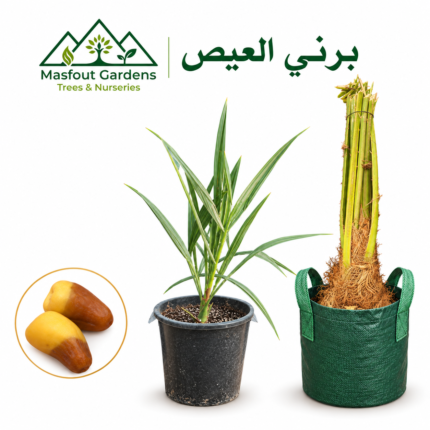
Zamli Date Palm – Distinctive Fruit at Three Stages of Ripeness
This variety is known for its versatility across different stages of consumption, allowing its fruit to be enjoyed as bisr, rutab, or tamr, making it a suitable choice for lovers of diverse date varieties.
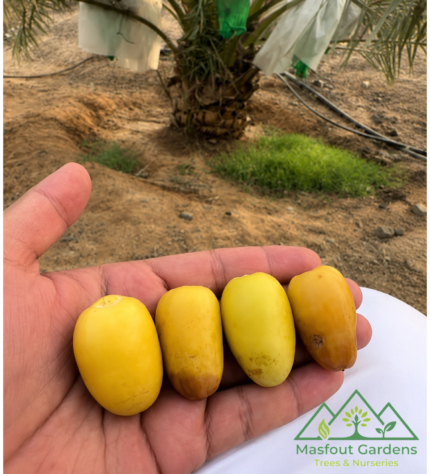
The fruit starts with an attractive yellow color at the bisr stage, then develops a distinctive golden color at the rutab stage, with a soft texture and rich flavor. As the fruit reaches full ripeness, it can be enjoyed as tamr, offering a different taste experience.
This date palm is produced through carefully managed tissue culture propagation to preserve the purity of the variety and maintain its consistent characteristics, making it a suitable choice for those seeking a date palm that combines fruit quality with versatility across different stages o
The fruit can be enjoyed at the bisr, rutab, and tamr stages.
Yellow fruit that develops an attractive golden color at the rutab stage.
Soft texture and rich flavor.
Tissue-cultured propagation while preserving the variety’s characteristics.
A versatile variety for date lovers.
Suitable for enjoying the fruit at different stages of ripeness.
Frequently Asked Questions (FAQs)
1. What Is the Zamli Date Palm?
Zamli date palm is a distinctive date variety known for its versatility, with fruit that can be enjoyed at the bisr, rutab, and tamr stages.
2. What Color Are Zamli Dates?
The fruit is yellow at the bisr stage, then turns an attractive golden color at the rutab stage.
3. What Do Zamli Dates Taste Like?
The fruit has a rich flavor and soft texture, especially when it reaches the rutab stage.
4. Is the Zamli Date Palm Tissue-Cultured?
Yes, it is available as a tissue-cultured date palm, carefully produced to preserve the purity of the variety and maintain its consistent characteristics.
5. Can Zamli Dates Be Enjoyed at More Than One Stage of Ripeness?
Yes, the fruit can be enjoyed at different stages of ripeness, including bisr, rutab, and tamr.