Growing a Mango Seed at Home: From Seed to Seedling
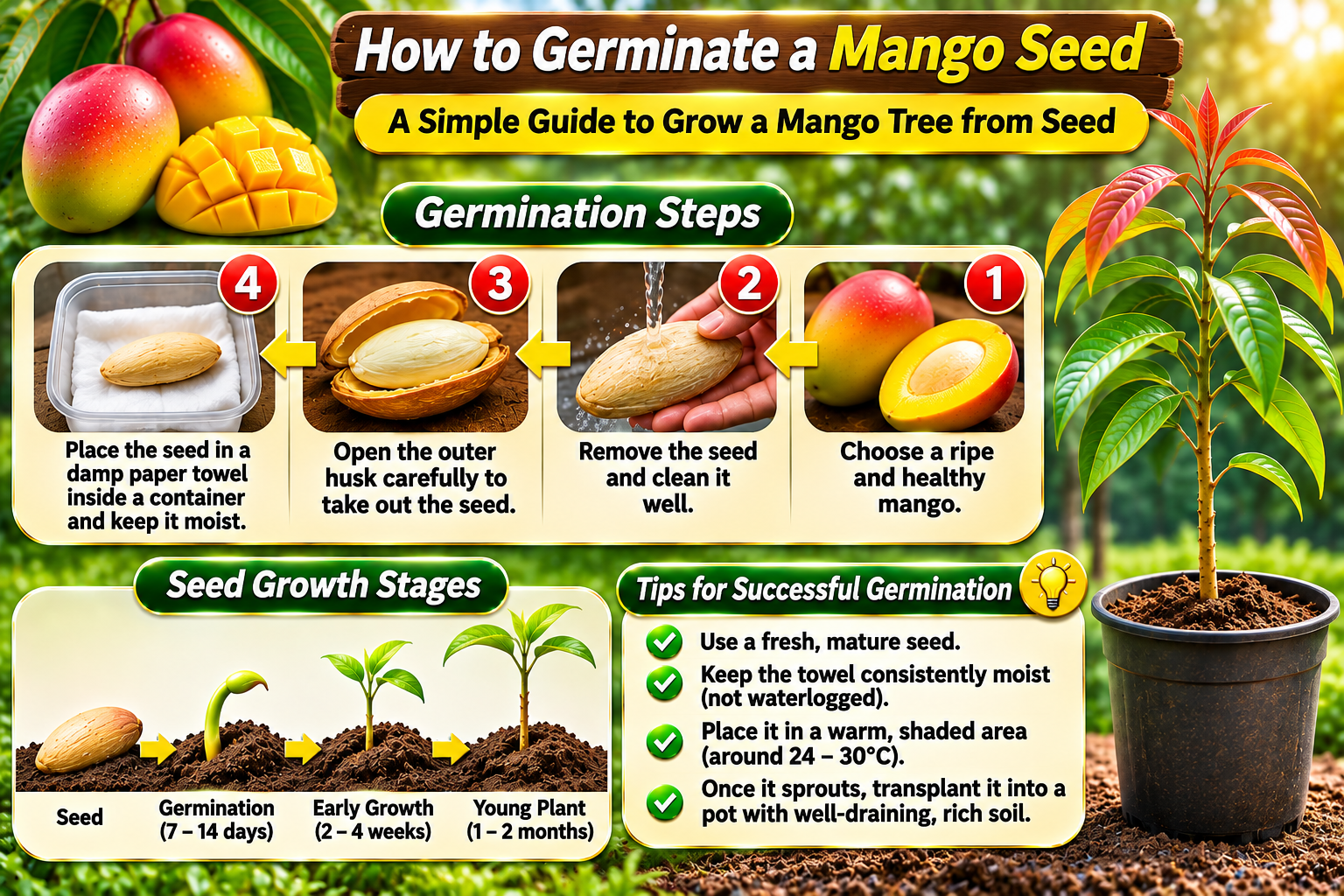
Growing a mango seed at home is an enjoyable experience for gardening enthusiasts, allowing them to follow the development of a new plant from the seed to a young seedling. The process of growing a mango seed does not require complicated tools, but it does involve choosing a fresh seed, preparing well-draining soil, and providing suitable warmth and moisture.The results of mango seed germination vary depending on the variety, seed condition, planting method, and surrounding environment. Successful germination does not necessarily guarantee a tree identical to the parent tree or fruit with the same characteristics.
The results of mango seed germination vary depending on the variety, seed condition, planting method, and surrounding growing conditions. Therefore, successful germination does not necessarily mean that the resulting tree will be identical to the parent tree or produce fruit with the same characteristics.
1. Choosing a Suitable Seed for Mango Germination
The first step in growing a mango seed is selecting a ripe, healthy mango and removing its inner seed after eating the fruit. It is preferable to use the seed shortly after extraction, as allowing it to dry completely may reduce the chances of successful germination.Before starting mango seed germination, remove any remaining fruit flesh from the seed and inspect it for visible damage or signs of decay. Fresh, healthy seeds provide better conditions for the embryo to begin growing.
Before starting mango seed germination, remove any remaining fruit flesh from the seed and inspect it for visible damage or signs of decay. Fresh, healthy seeds provide better conditions for the embryo to begin developing.
It is also important to understand that mango seeds differ in their characteristics. Some varieties are polyembryonic, while others are monoembryonic. This can affect the number of seedlings produced and the characteristics of the resulting plants.
2. Preparing the Mango Seed Before Planting
After cleaning the seed, you can prepare it for mango seed germination directly in the soil. There are different methods for handling the hard outer shell, but avoid using sharp tools without proper experience, as this could cause injury or damage the seed.
You can use a pre-prepared seed from a reliable source or ask an experienced adult for assistance if the hard outer shell needs to be handled.
This stage is important for growing a mango seed because the seed's condition and moisture retention affect its ability to begin growing. Avoid leaving the seed exposed to air for extended periods after extraction.
3. How to Grow a Mango Seed at Home
To begin mango seed germination, choose a container with drainage holes and use a light, well-draining growing medium. This helps provide adequate airflow around the seed and reduces the risk of waterlogging.
Follow these steps:
Fill the container with a suitable, well-draining growing medium.
Place the seed in the growing medium with its concave side facing downward.
Cover the seed with a suitable layer of soil without burying it too deeply.
Add a moderate amount of water to moisten the soil.
Place the container in a warm location with good light, away from harsh conditions.
After planting, monitor the soil moisture regularly. The aim is to keep the growing medium moderately moist rather than continuously saturated with water.
For additional information about mango seed germination, consult Texas A&M AgriLife's mango growing guide.
4. How Long Does Mango Seed Germination Take?
Mango seed germination may take approximately two to three weeks under suitable conditions, although the timeframe is not fixed. It depends on temperature, seed condition, soil moisture, and planting method.
During mango seed germination, avoid repeatedly removing the seed from the container for inspection, as disturbing it may interfere with early root development. Once the shoot appears, continue providing suitable light and moderate moisture.
If mango seed germination takes longer than expected, this does not necessarily mean the attempt has failed. Seeds may develop at different rates, while damaged or dried-out seeds may have lower chances of germination.
5. Caring for a Mango Seedling After Germination
Once mango seed germination is successful and the shoot appears, the next stage is caring for the young seedling. At this point, the plant needs suitable conditions to support gradual root and leaf development.
Important care guidelines include:
Lighting: Place the seedling in a well-lit location and gradually introduce it to direct sunlight to avoid stressing young leaves.
Watering: Maintain moderate soil moisture and check the growing medium before adding more water.
Drainage: Ensure that excess water can escape through the container's drainage holes.
Nutrition: Avoid applying fertilizer too early. Follow a suitable feeding program once the seedling is established and new growth appears.Monitoring: Inspect the leaves and stem for signs of wilting, yellowing, or pest infestation.
Monitoring: Check the leaves and stem regularly for signs of wilting, yellowing, or pest infestation.
Regular care after mango seed germination helps you monitor seedling development and identify potential problems early. Avoid transferring the seedling to another container until it is sufficiently established.
The University of Guam's mango propagation guide explains the differences between monoembryonic and polyembryonic mango seeds and how these differences affect the resulting plants.
Does Growing a Mango Seed Guarantee Good-Quality Fruit?
Growing a mango seed does not guarantee a tree that produces fruit identical to the mango from which the seed was obtained. The outcome depends on the variety and its propagation characteristics. Some polyembryonic seeds may produce seedlings that retain more of the parent tree's characteristics, while plants grown from monoembryonic seeds may differ from the original variety.
Therefore, mango seed germination is a useful learning experience for following plant growth, but it should not be considered a guarantee of obtaining a specific variety or fruit with predictable characteristics.
Conclusion
Growing a mango seed at home requires a fresh, healthy seed, a well-draining growing medium, moderate watering, and a warm location with suitable light. By monitoring root and shoot development and providing appropriate early care, you can follow the seed's transformation into a young seedling.The results of mango seed germination and the characteristics of the resulting plant depend on the variety, seed type, and growing conditions. Understanding these differences is important before starting the process.
The results of mango seed germination and the characteristics of the resulting plant depend on the variety, seed type, and growing conditions. Understanding these differences is therefore important before starting the process.