Mango Sunburn: How to Assess Damage and Review Prevention Measures
Farmers may notice light or dark spots appearing on mango skin, particularly on areas that receive greater exposure to direct sunlight. These signs may indicate possible sunburn, but a change in color alone is not enough to determine the cause. Assessing sunburn on mango fruit therefore requires careful inspection and documented monitoring before taking any action.
Understanding the signs of sunburn on mango fruit helps distinguish changes caused by direct sunlight from other problems that may affect the fruit skin. It is important to examine the affected area and monitor how the symptoms develop before identifying the cause or choosing an appropriate preventive measure.
What Is Sunburn on Mango Fruit?
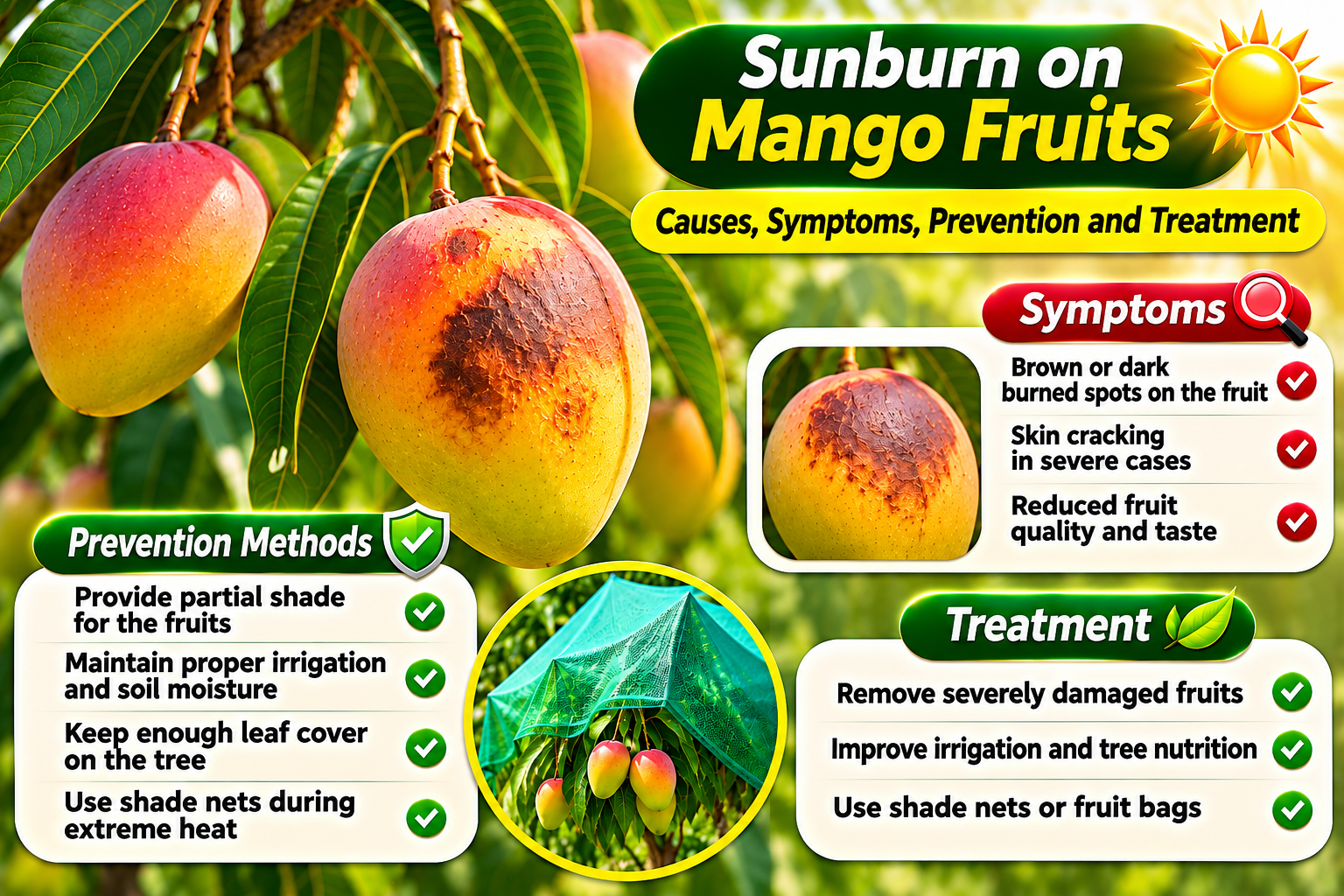
Sunburn on mango fruit refers to damage affecting the fruit surface or skin tissues due to intense, direct exposure to sunlight, which may be associated with increased fruit surface temperature. The severity of the damage varies depending on exposure duration, surrounding conditions, and the fruit's stage of development.
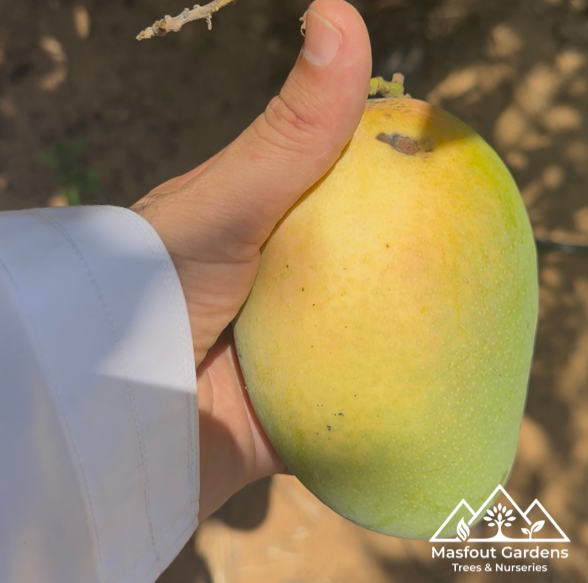
Sunburn on mangoes may appear as localized changes in skin color or texture. In some cases, the damage remains limited to the outer skin, while in others, it may become more noticeable as the condition develops. Therefore, not every spot should be considered confirmed sunburn. The visible signs should be assessed alongside the fruit's exposure conditions and examined carefully.
What Are the Signs of Sunburn on Mangoes?
The symptoms of sunburn on mango fruit can vary from one case to another, but several signs are worth monitoring, including:
Light or faded spots appearing on the exposed part of the fruit.
A localized change in skin color compared with the surrounding surface.
A difference in texture between the affected area and the surrounding skin.
Dryness or superficial damage in the area suspected of sun exposure.
Changes that become more noticeable during follow-up inspections.
These signs may be more visible on the side facing the sun than on areas protected by the tree canopy. However, a spot in an exposed location does not automatically confirm mango skin sunburn, as other conditions can produce similar symptoms.
How Can You Assess Sun Damage on Mango Fruit?
Assessing sun damage on mango fruit begins with a systematic inspection rather than a quick visual judgment. The following steps can help:
Inspect the fruit: Select a representative sample from different areas of the tree rather than examining only one fruit.
Identify the affected location: Record whether the signs appear on the sun-exposed side or in multiple areas.
Estimate the affected area: Compare the size of the discolored area with the total surface of the fruit skin.
Compare different cases: Compare affected fruit with apparently healthy fruit from the same group.
Monitor changes: Repeat the inspection after an appropriate period to determine whether the signs remain stable or change.
Record the findings: Keep notes and photographs to support comparisons and future decisions.
When assessing sunburn on mango fruit, recording the number of affected fruits alone is not sufficient. It is also important to document the affected skin area, its location, and how frequently the signs appear across different trees.
This assessment helps determine how widely the problem is distributed throughout the farm. However, it does not replace professional diagnosis when the signs are unclear or resemble symptoms of other plant health problems.
How Should You Document Cases of Sunburn on Mango Fruit?
Documenting sunburn on mango fruit is an important step in understanding the damage pattern and comparing cases over time. A simple record can include the following information:
Date of observation.
Tree identification number or farm location.
Number of fruits showing suspected symptoms.
Location of the Discoloration on Each Fruit.
Brief description of the skin color and texture.
Clear photographs of the fruit from different angles.
Results of subsequent inspections and any observed changes.
Photographs and written records of sunburn on mango fruit make it easier to compare fruit conditions throughout the growing season and determine whether the problem is limited to certain areas or distributed across the farm.
Photograph each fruit under clear lighting, keeping both a general picture of the tree and a closer image of the affected area. Using a consistent photography method also makes comparisons between inspection dates more reliable.
What Factors May Increase the Risk of Sunburn on Mango Fruit?
The risk of sunburn on mango fruit is associated with several factors related to sunlight exposure and surrounding conditions, including:
Prolonged Exposure to Direct Sunlight.
Fruit growing on the outer, exposed parts of the tree.
Increased fruit exposure following changes in canopy density.
High air and fruit surface temperatures during periods of intense sunlight.
Differences in fruit position and orientation relative to the sun.
The presence of any one of these factors does not necessarily mean sunburn will occur. However, understanding them helps identify conditions that may increase the likelihood of mango sunburn and highlights areas that require closer monitoring.
What Are the Options for Protecting Mango Fruit from Sunburn?
Protecting mango fruit from sunburn depends on assessing farm conditions and the level of sunlight exposure rather than applying a single solution in every situation. Prevention begins by reviewing how the fruit is exposed to sunlight and selecting measures that suit the site and its specific conditions.
1. Review Fruit Distribution Within the Tree
Inspecting fruit locations helps identify areas with greater sunlight exposure and determine whether damage repeatedly occurs in a particular direction or section of the trees.
2. Assess Canopy Coverage
The condition of the foliage surrounding the fruit should be reviewed because it affects the amount of direct sunlight reaching the fruit. Any agricultural adjustments should follow the tree's needs and professional recommendations, without unnecessary leaf removal.
3. Consider Suitable Shading Options
Shading methods may be worth considering in locations where fruit damage occurs repeatedly. However, the appropriate option depends on the farm layout, size, exposure level, and ventilation requirements.
4. Monitor Fruit During Periods of Intense Heat
Regular inspections help identify early signs and highlight areas where preventive measures may need to be reviewed, rather than waiting until the damage becomes widespread.
5. Evaluate the Results After Applying Preventive Measures
Choosing a method to protect mango fruit from sunlight is not enough. The results should be documented, and fruit conditions should be compared before and after implementation to determine whether the selected approach is suitable for the existing conditions.
Common Mistakes to Avoid When Assessing Sunburn on Mango Fruit
Certain practices can lead to inaccurate assessments or unsuitable prevention decisions. Common mistakes include:
Treating every spot on the fruit skin as sunburn without proper inspection.
Relying on fruit color alone to identify the cause of damage.
Confusing sunburn with disease symptoms or mechanical injuries.
Making decisions about affected fruit before documenting its condition.
Using shading methods without considering ventilation and site conditions.
Ignoring comparisons between exposed fruit and fruit receiving less direct sunlight.
Regular monitoring of sunburn on mango fruit also helps detect changes early and assess the effectiveness of existing protective measures instead of relying on occasional visual observations.
When Should You Consult an Agricultural Specialist?
Consulting an agricultural specialist becomes important when symptoms appear on a large number of fruits, changes develop unusually, or it is difficult to distinguish sunburn on mango fruit from other causes of skin damage.
Professional assessment is also recommended when additional symptoms appear that cannot be explained by sunlight exposure alone, or when the problem continues despite reviewing preventive measures. A field inspection can help identify the cause more accurately and prevent the use of unsuitable solutions.
Conclusion
Managing sunburn on mango fruit involves more than simply noticing a change in skin color. The appropriate approach begins with inspecting the fruit, identifying the affected areas, documenting visible signs, and monitoring how they develop. Prevention options can then be reviewed according to farm conditions, with professional advice sought when necessary.
Systematic assessment and regular monitoring provide a clearer understanding of sunburn on mango fruit and help guide suitable preventive measures without premature diagnosis or reliance on random solutions.