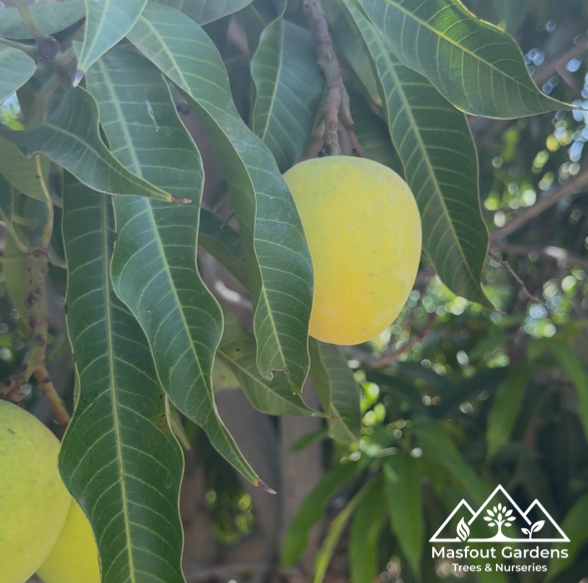
Mango Leaf Analysis: A Guide to Sample Collection and Understanding Results
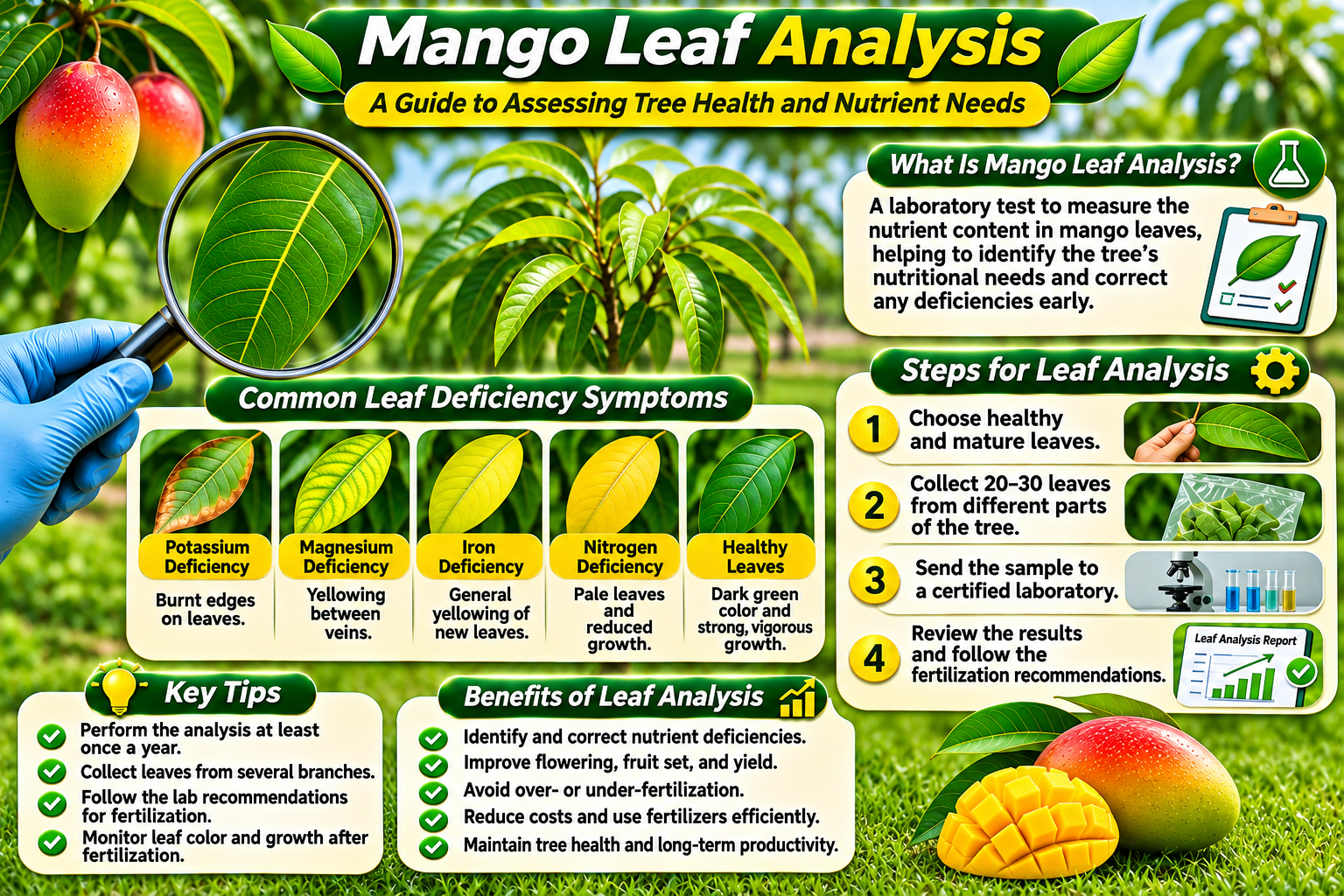
Mango leaf analysis is one of the methods used to assess the nutritional status of mango trees by measuring the concentration of certain nutrients in their leaves and comparing the results with appropriate reference ranges. This analysis provides a clearer picture of a tree's nutritional condition, but it should not be used alone to determine its nutrient requirements or establish a fertilization program.
In this guide, we explore the purpose of leaf analysis, how to prepare and submit samples to the laboratory, and how to understand the results in consultation with a specialist.
1. What Is the Purpose of Mango Leaf Analysis?
Mango leaf analysis aims to determine nutrient levels within leaf tissues and assess whether their concentrations fall within the established reference ranges for mango trees.
It can be useful for:
Monitoring the nutritional status of mango trees.
Evaluating the results of previous fertilization programs.
Supporting nutrient management decisions in consultation with a specialist.
Comparing results from samples collected at different times or locations when a consistent sampling method is followed.
However, leaf analysis is not an independent diagnostic tool for every problem affecting mango trees, and the results alone cannot establish the cause of changes in tree growth.
2. The Difference Between Leaf, Soil, and Water Analysis
Each type of analysis provides different but complementary information:
Mango leaf analysis: Measures the concentration of nutrients within plant tissues at the time the sample is collected.
Soil analysis: Helps assess soil properties, nutrient levels, and certain factors that affect nutrient availability to the roots.
Irrigation water analysis: Identifies water characteristics that may affect the soil and trees, such as salinity and certain dissolved components.
Therefore, mango leaf analysis does not replace soil and water testing. Instead, combining these results provides a more comprehensive assessment. You can also explore our related article on Soil and Water Analysis for further information.
3. What Information Does the Laboratory Need About Mango Trees?
Accurate mango leaf analysis depends on more than the sample itself. Providing background information helps the laboratory or specialist interpret the results appropriately.
It is advisable to prepare the following details:
Mango variety or classification, if known.
Approximate age of the trees.
Location of the orchard or garden.
Soil type and irrigation system used.
Date and type of the most recent fertilization.
Any noticeable differences between trees or growing areas.
The more accurate the information, the easier it is to interpret the results in the context of the actual growing conditions.
4. The Importance of Leaf Selection and Sampling Time
Following the laboratory's sampling protocol is essential before collecting mango leaf samples. Leaf age, position on the tree, and collection time can all affect the measured nutrient concentrations.
Leaves should not be selected randomly, nor should a fixed number be assumed suitable for every situation. Sampling requirements may vary according to the variety, tree age, purpose of the analysis, and the laboratory's approved procedures.
Therefore, request specific instructions from the relevant laboratory regarding:
The required leaf position on the tree.
Leaf age and growth stage.
The number of trees and leaves needed per sample.
The appropriate collection time or season.
Whether samples should be separated by variety or orchard location.
5. How Should Mango Leaf Samples Be Packaged and Stored?
After collecting the sample according to the laboratory's instructions, handle it carefully to prevent contamination, mixing, or deterioration.
The main steps include:
Place the sample in the container or bag recommended by the laboratory.
Clearly label the sample with details such as location, variety, and collection date.
Do not mix leaves from different trees or areas if they are intended for separate analysis.
Avoid washing, drying, or treating the leaves before submission unless instructed by the laboratory.
Follow the laboratory's specific requirements for storage, transportation, and delivery time.
There is no single packaging method or storage temperature suitable for all laboratories. The instructions provided by the relevant laboratory should always be followed.
6. How Should Mango Leaf Analysis Results Be Interpreted?
A laboratory report may include nutrient names, measured concentrations, units of measurement, and reference ranges used for comparison.
When reviewing the results, pay attention to:
The unit of measurement listed for each nutrient.
Whether the results are expressed on a dry-weight basis or another basis.
The reference range used and whether it applies to the mango variety being assessed.
The sample collection date and leaf growth stage.
Whether the sampling method followed the laboratory's approved protocol.
It is best to review the report with an agricultural engineer or plant nutrition specialist. Interpreting figures without understanding the sample conditions may lead to inaccurate conclusions.
7. Why Should Analysis Results Not Be Used Alone to Create a Fertilization Program?
Mango leaf analysis indicates the nutritional status of the leaves at the time of sampling, but it does not independently determine the type, quantity, or timing of fertilizer applications.
Fertilization decisions should also consider soil and water analysis results, tree age and condition, previous fertilization practices, irrigation conditions, and production requirements. Any recommendation should be appropriate for the mango variety and actual growing conditions.
Therefore, leaf analysis should be treated as one part of the overall assessment rather than a ready-made fertilization prescription. You can also refer to our Fertilization article to learn more about managing nutrient requirements in mango trees, while consulting a specialist before making specific recommendations.
Conclusion
Mango leaf analysis helps assess the nutritional status of mango trees when samples are collected and stored according to the laboratory's protocol. The accuracy and usefulness of the results depend on providing relevant tree information, following the appropriate sampling schedule, and correctly understanding measurement units and reference ranges.
For the most reliable assessment, leaf analysis should always be considered alongside soil conditions, irrigation water quality, and growing conditions. This helps ensure that fertilization decisions are based on a comprehensive evaluation rather than a single test result.