Mango Flower Pollination: Does a Mango Tree Need Another Variety to Produce Fruit?
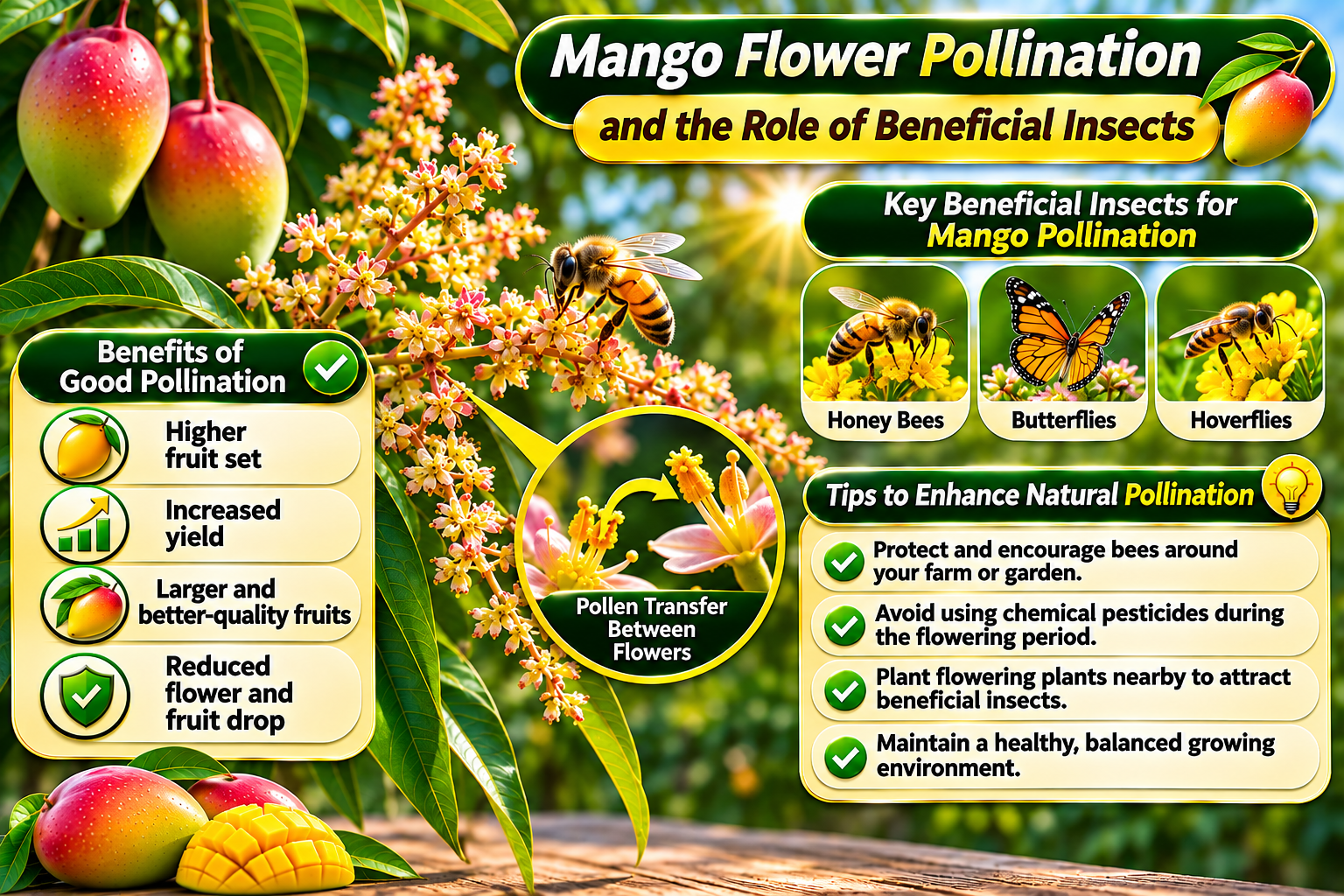
Mango flower pollination is an important stage in the reproduction of mango trees and the development of fruit. The process takes place when pollen moves from the male part of a flower to the female part. This can happen through self-pollination or cross-pollination, with the help of insects and other natural factors.
But can a mango tree pollinate its own flowers? Does it need another mango variety nearby? And what role do beneficial insects play in mango flower pollination? Understanding these aspects helps explain how pollination works and how to observe flower activity during the blooming season.
1. What Is Mango Flower Pollination?
Mango flower pollination refers to the transfer of pollen grains from the anther, which produces pollen, to the stigma, located in the female part of the flower. After successful pollination and fertilization, fruit development may begin.
Pollination can occur within the same flower or between flowers on the same tree. Pollen can also move between different trees. The way mango flower pollination occurs, and its results, can vary depending on the mango variety and surrounding environmental conditions.
It is important to distinguish between pollination, fertilization, and fruit set. Pollen transfer alone does not necessarily mean that every flower will develop into a fruit.
2. Are Mango Trees Self-Pollinating?
Some mango varieties can benefit from self-pollination, which occurs when pollen is transferred within the same flower or between flowers on the same tree. As a result, certain mango trees may complete part of the mango flower pollination process without requiring another tree nearby.
However, not all varieties behave in the same way, and self-pollination does not guarantee successful fruit development. The effectiveness of mango flower pollination can be influenced by the variety, flowering time, environmental conditions, and insect activity.
3. Does a Mango Tree Need a Second Tree?
Not every mango tree needs a second tree to produce fruit. Some varieties can benefit from self-pollination, while the presence of another compatible variety flowering at the same time may provide opportunities for cross-pollination.
Cross-pollination occurs when pollen moves from flowers on one tree to flowers on another. This can contribute to mango flower pollination, but its effectiveness depends on variety compatibility and overlapping flowering periods.
Simply having two different mango trees is not enough to guarantee successful pollination. If you are considering growing more than one variety, it is important to check their compatibility and flowering times before making a selection.
4. Which Insects Help Pollinate Mango Flowers?
Some insects contribute to mango flower pollination by transferring pollen as they move between flowers. Several insect groups may visit mango blossoms, including:
Bees: They visit flowers to collect food and may help transfer pollen.
Flies: Different fly species visit mango flowers, and some may contribute to pollination.
Wasps: They may visit flowers for food and can transfer pollen in certain cases.
Beetles: Some beetle species visit flowers and may come into contact with pollen-bearing parts.
However, it is important to distinguish between insects that simply visit flowers and those that are effective pollinators. An insect's presence on a flower does not necessarily prove that it transfers a meaningful amount of pollen. Specialized studies have shown that the contribution of different insects to mango flower pollination varies according to the species and the environment in which the research was conducted.
5. How Can You Monitor Insect Activity During Mango Flower Pollination?
Monitoring insects during the flowering season can help you understand their activity around mango trees. You can observe mango flower pollination by keeping regular notes about the insects visiting the flowers and the times when they appear most active.
Follow these steps:
Observe the flowers at different times of the day.
Record the types of insects visiting the flowers, if you can identify them.
Notice whether insects come into contact with the pollen-bearing parts of the flowers.
Repeat your observations on different days and record general weather conditions.
Do not treat frequent insect visits as definitive proof of successful pollination or a guarantee of fruit set.
Regular observation can provide a clearer picture of pollinator activity in your garden, although it does not replace a professional agricultural assessment when one is needed.
6. How Can You Protect Insects That Pollinate Mango Flowers?
Protecting beneficial insects is an important part of managing mango trees during the flowering season. Improper pesticide use may affect insects visiting the flowers, including some pollinators that contribute to mango flower pollination.
For this reason, always follow the pesticide label carefully, including its application timing, method, and pollinator-protection precautions. Avoid unnecessary spraying or using any product without confirming that it is suitable for the crop and following the approved instructions.
The Food and Agriculture Organization (FAO) highlights the importance of pesticide application timing and measures that reduce pollinator exposure. These precautions can help manage pests while minimizing unnecessary harm to beneficial insects.
7. Can Mango Flowers Be Hand-Pollinated?
Hand pollination can be tested in certain situations by transferring pollen to flower stigmas using suitable tools. However, the success of mango flower pollination through this method depends on the variety, the timing of flower receptivity, and the technique used.
Hand pollination is not necessary for every home garden, nor should it be considered a guaranteed way to increase production. If there is a genuine need to try this method, it is best to consult an agricultural specialist to determine the appropriate technique and timing.
8. When Should You Seek a Professional Agricultural Assessment?
If you want to understand how effectively mango flower pollination is taking place in your garden, a professional assessment may be helpful. This is particularly relevant when you need to check variety compatibility or understand the role of insects in the pollination process.
An assessment can help review the mango variety, flowering time, presence of other nearby varieties, and conditions surrounding the flowers. A specialist can also determine whether hand-pollination trials or further monitoring may be appropriate.
Conclusion
Mango flower pollination depends on several factors, including the characteristics of the variety, self-pollination and cross-pollination, and the activity of insects visiting the flowers. Not every mango tree necessarily needs another variety to produce fruit, and neither insect presence nor hand pollination guarantees fruit development.
Understanding how mango flower pollination works and the role of beneficial insects can help you monitor your tree during the flowering season and make informed decisions based on its variety and growing conditions.
Planning to add a mango tree to your garden? Explore the mango varieties available at Masfout Gardens and ask about the characteristics of the available plants before choosing.