Effects of Soil and Irrigation Water Salinity on Mango Trees in the UAE
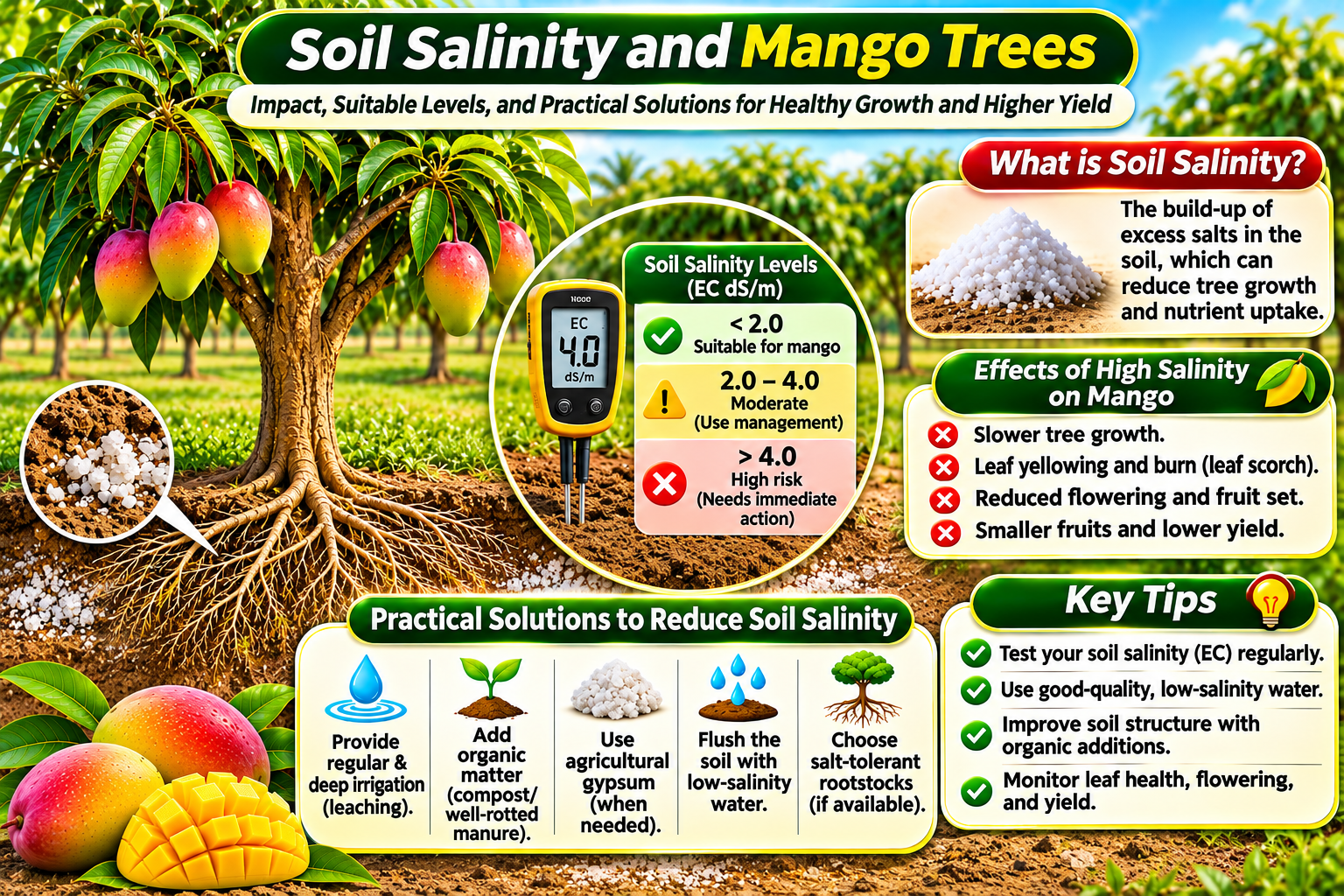
Soil Salinity and Mango Trees is an important factor to consider when growing mango trees in the UAE, particularly in areas with high temperatures or gardens that rely on irrigation water containing varying levels of salts. Soil salinity can affect the conditions surrounding the roots and may limit the tree’s ability to absorb water and nutrients naturally.
Understanding the relationship between soil salinity and mango trees helps garden owners monitor soil and irrigation water quality and identify potential problems early. This guide explores the causes of increased salinity, its effects on tree growth, and ways to test and manage it according to mango-growing conditions in the UAE.
1. What Is Soil and Irrigation Water Salinity?
Soil salinity refers to the presence of dissolved salts in the soil at concentrations that may affect plant growth. Irrigation water salinity, on the other hand, refers to the amount of salt in the water used to irrigate trees.
These salts include various compounds and elements, such as sodium, chloride, calcium, and magnesium. The impact of salinity depends not only on the presence of salts but also on their type and concentration, as well as soil characteristics and drainage efficiency.
When examining soil salinity and mango trees, both the soil and irrigation water should be assessed. Using water with high salt concentrations may cause salts to accumulate around the roots over time, particularly when adequate drainage conditions are not available.
2. How Soil Salinity Affects Mango Tree Growth
Mango trees need suitable root-zone conditions to absorb water and nutrients properly. Increased salinity may interfere with this process in several ways, making the monitoring of soil salinity an important part of garden management.
Some potential effects include:
Reduced water absorption: High salt concentrations around the roots may make it more difficult for the tree to absorb available water from the soil.
Affected root growth: Excessive salinity may interfere with root activity and development, particularly when the problem persists over time.
Leaf damage: In some cases, signs of stress may appear on the leaves, such as discoloration or dry leaf tips. However, these symptoms can also result from other causes.
تأثر الأوراق: في بعض الحالات، قد تظهر علامات إجهاد على الأوراق، مثل تغير اللون أو جفاف أطرافها، لكن هذه العلامات قد تنتج أيضًا عن أسباب أخرى.
Decline in overall tree health: Prolonged exposure to unsuitable salinity conditions may affect the tree’s vitality and ability to grow consistently.
The degree of impact varies depending on the variety, tree age, and growing conditions. Therefore, evaluating soil salinity and mango trees should not rely on visible symptoms alone. It also requires soil and water testing and an assessment of root health.
3. What Causes Soil Salinity to Increase in Mango Gardens?
Soil salinity may increase due to several factors related to the water source, soil characteristics, and irrigation management. Identifying these causes helps explain salinity problems and determine the appropriate response.
Using Irrigation Water with High Salinity
Some irrigation water sources may contain high concentrations of dissolved salts. With repeated irrigation, these salts can accumulate in the soil, especially when adequate drainage conditions are lacking.
For this reason, testing irrigation water is an important step when monitoring soil salinity and mango trees, particularly when the same water source is used over an extended period.
High Temperatures and Increased Evaporation
High temperatures increase water loss from the soil surface, while some dissolved salts remain behind. As this process continues, salt concentrations in the root zone may increase.
Poor Water Drainage
When excess water cannot drain away from the root zone, salts may accumulate in the soil instead of moving into deeper layers. This is why managing soil salinity and mango trees depends on drainage efficiency as much as it depends on irrigation water quality.
Soil Conditions
Different soil types vary in their ability to retain and drain water. The characteristics of certain soils may increase the likelihood of salt accumulation, particularly when irrigation and drainage practices are not suited to the soil's properties.
Irregular Irrigation Management
Irrigating in unsuitable amounts or at inappropriate intervals may increase salt concentrations in the root zone. Water management should therefore be adjusted according to soil type, tree age, climate conditions, and the tree’s actual water requirements.
4. How Is Soil and Irrigation Water Salinity Tested?
Testing is an essential step in determining whether salinity is actually affecting mango trees. Soil and irrigation water analysis helps assess soil salinity and mango trees more accurately, rather than relying solely on the trees’ external appearance.
Soil Salinity Testing
Soil analysis helps determine the level of dissolved salts. Electrical conductivity (EC) is commonly used as an indicator to estimate salt concentration. The measurement method and interpretation of results may vary depending on sample preparation and the type of test performed.
It is best to collect representative samples from different areas of the garden, paying particular attention to the soil around the root zone. Follow the laboratory's instructions regarding sampling depth and collection methods.
Irrigation Water Testing
Irrigation water analysis helps identify the amount of dissolved salts and certain elements that may affect the water’s suitability for agricultural use. Testing may include electrical conductivity measurements, along with sodium, chloride, and other elements as needed.
Comparing Test Results
A single test result should not be interpreted in isolation. It is important to compare soil analysis with water analysis while considering soil type, drainage efficiency, and tree condition.
This comparison helps identify the nature of soil salinity and mango trees problems and determine whether the salt source is related to irrigation water, soil characteristics, or water management practices.
You can also refer to the University of Florida IFAS guidelines on soil salinity and electrical conductivity to understand some of the principles involved in measuring salinity and its effects on plants.
5. How Can Salt Accumulation Around Mango Roots Be Reduced?
Managing salinity depends on test results, soil characteristics, and the water source. There is no single method suitable for every garden. The appropriate measures should be selected according to site conditions and the results of soil salinity and mango trees assessments.
Review the Irrigation Water Source
If testing reveals high water salinity, it is important to evaluate the source and consider suitable alternatives when available. An agricultural specialist can help determine whether the water is appropriate for irrigating mango trees.
Improve Drainage Efficiency
Proper drainage helps remove excess water and the salts carried with it from the root zone. If the soil retains water for extended periods, the garden's drainage system may need to be assessed before increasing irrigation amounts.
Adjust Irrigation Schedules
Irrigation timing and quantities should be adjusted according to tree requirements, soil characteristics, and weather conditions. Irregular irrigation may stress the tree or increase the risk of salt accumulation. However, increasing water quantities without first confirming drainage efficiency is not recommended.
Avoid Unnecessary Fertilizer Applications
Excessive fertilizer use may increase salt concentrations around the roots. It is therefore best to rely on soil test results and the tree's nutritional requirements when selecting fertilizer types, quantities, and application schedules.
Monitor Tree Condition
Regularly observing leaves, branches, and new growth can help identify signs of stress early. If unusual symptoms appear, they should be assessed alongside test results rather than assuming that salinity is the only cause.
Effective management of soil salinity and mango trees begins with identifying the source of the salts, followed by selecting appropriate irrigation and drainage measures in accordance with an agricultural specialist's recommendations.
6. Do Mango Varieties Respond Differently to Salinity?
Mango trees may respond differently to environmental conditions, including salinity, depending on the variety, rootstock, tree age, and overall health. Soil characteristics, water quality, and irrigation management practices also influence how well trees adapt to growing conditions.
For this reason, it should not be assumed that all mango varieties respond in the same way when exposed to salinity. When selecting a variety for a garden, it is useful to consider its suitability for local conditions and ask the nursery or an agricultural specialist about the available information.
Choosing a suitable variety does not eliminate the need for soil and water testing. Monitoring soil salinity and mango trees remains important, even when selecting varieties considered suitable for the region.
7. When Does a Mango Tree Need a Soil Salinity Assessment?
Soil and irrigation water testing may be appropriate when several signs appear, particularly if they persist despite reviewing irrigation and fertilization schedules. Situations that may require assessment include:
Repeated signs of leaf stress without an obvious cause.
Slower growth of new branches compared with the tree's usual condition.
Visible salt crusts or deposits on the soil surface.
Using an irrigation water source that has not previously been tested.
Poor water drainage or water remaining around the root zone for extended periods.
Recurring problems affecting more than one tree in the garden.
Understanding the relationship between soil salinity and mango trees helps identify appropriate measures instead of relying on guesswork. If test results indicate high salinity, it is best to develop a management plan suited to the soil, water quality, and drainage conditions in consultation with an agricultural specialist.
Conclusion
Soil salinity can affect the root-zone conditions of mango trees. Excessive salt levels may make it difficult for roots to absorb water and nutrients, potentially affecting tree growth. Testing salinity levels, monitoring irrigation water quality, ensuring effective drainage, and maintaining an appropriate irrigation schedule can help support better agricultural decisions for gardens in the UAE.
Regularly monitoring soil salinity and mango trees, testing soil and irrigation water, and consulting an agricultural specialist when unusual symptoms appear can help identify problems early and maintain mango tree health over the long term.