Growing Mango Trees in Pots: 5 Tips for Healthy Growth
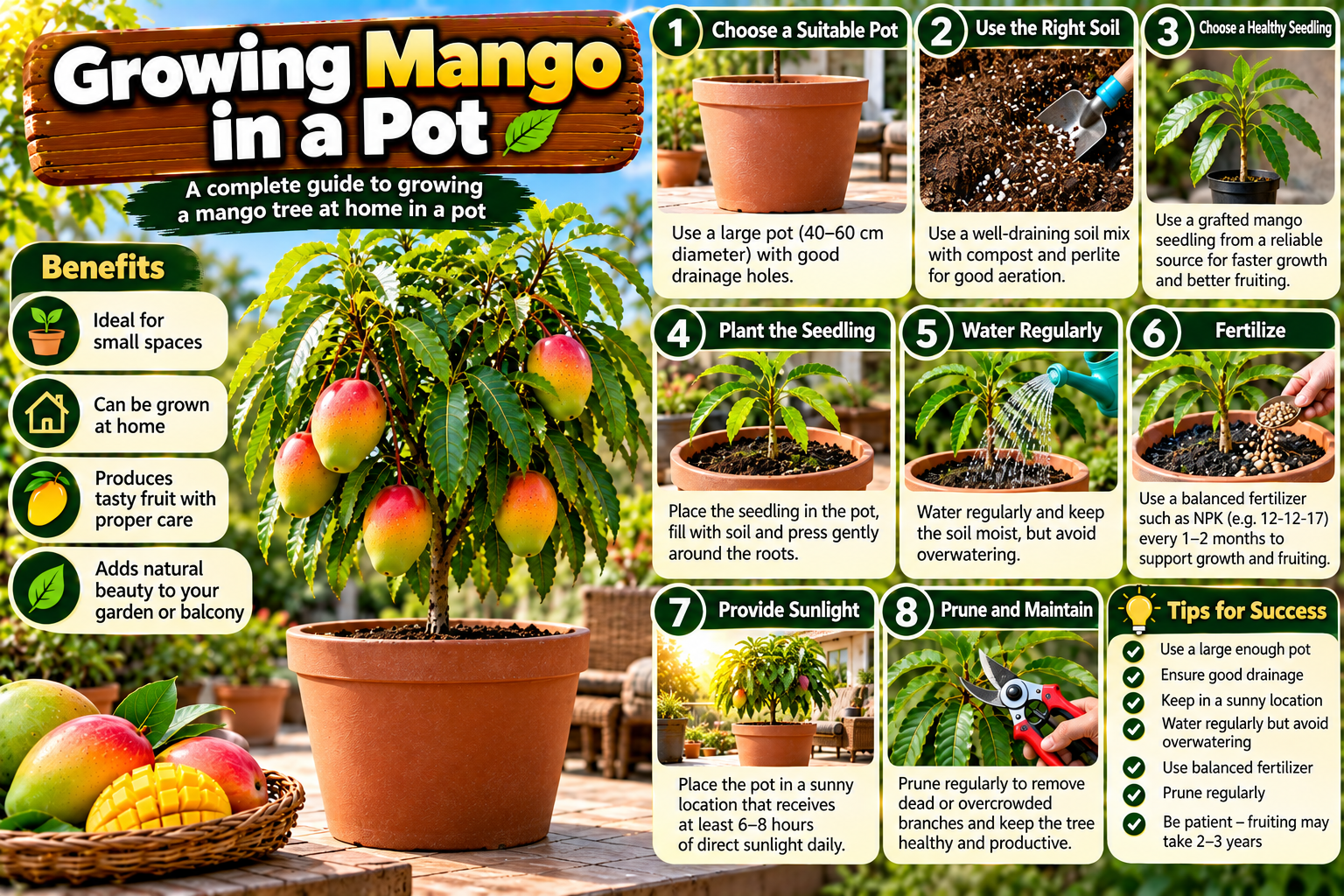
Growing mango trees in pots is a suitable option for people who enjoy growing fruit trees at home, on balconies, or in gardens with limited space. This method allows you to control the tree's location, monitor its growth, and provide the necessary growing conditions without requiring a large area of land.
However, growing mango trees in pots requires choosing a suitable container, well-drained soil, and an appropriate watering and fertilization routine. This is because root space is limited compared to trees planted directly in the ground.
1. Choosing the Right Variety for Growing Mango Trees in Pots
Choosing the right variety is an important step when considering growing mango trees in pots, as mango varieties differ in growth habits, tree size, and space requirements.
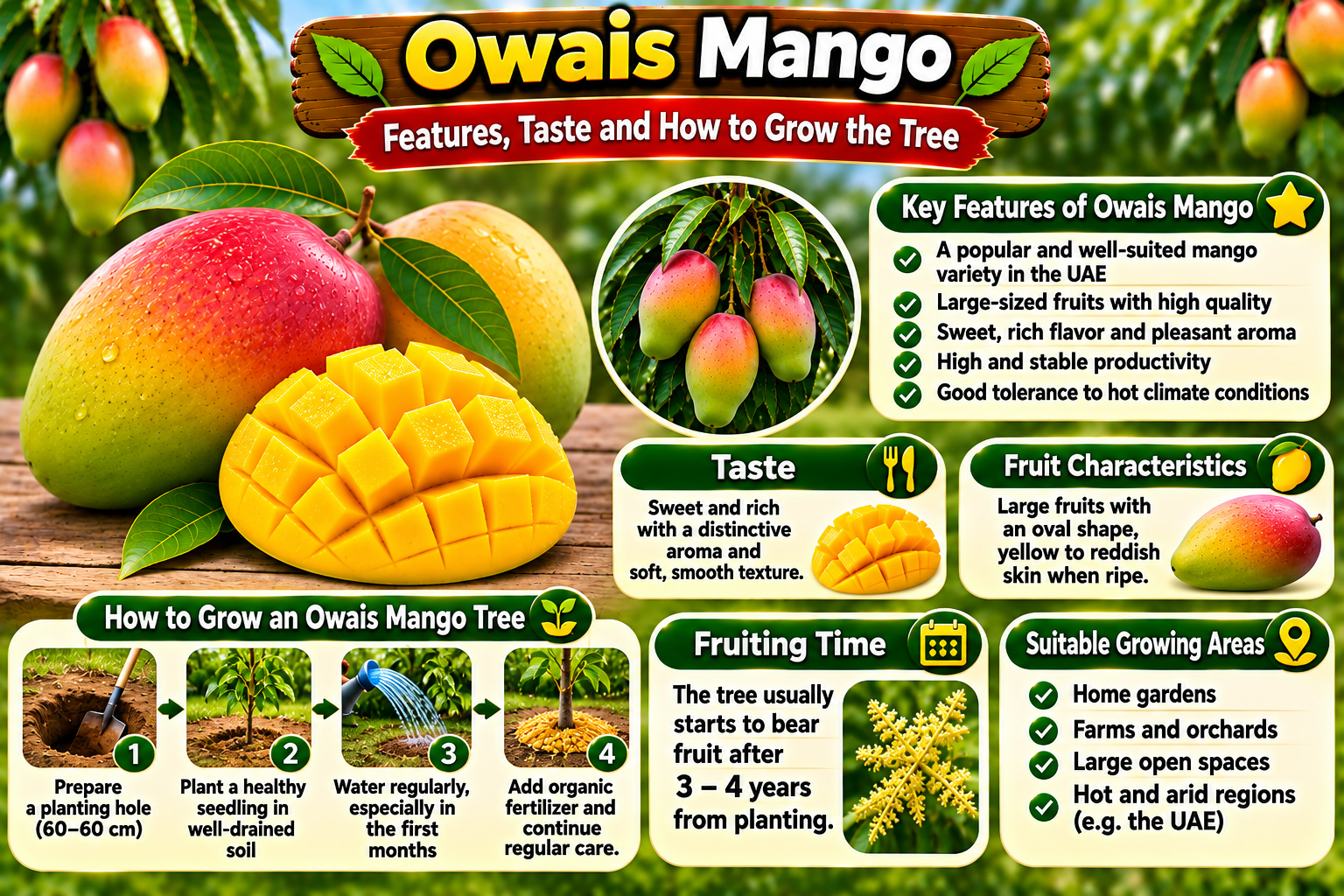
It is preferable to look for varieties with relatively compact growth habits that can be managed through appropriate pruning. Varieties mentioned in the University of Florida's guidelines for growing mango trees in containers include Cogshall and Mallika.
It is also advisable to choose a healthy seedling from a reliable supplier and ask about its variety, propagation method, and growing requirements. Selecting a suitable plant makes it easier to grow and care for a mango tree as it develops inside a container.
You can consult the University of Florida's guidelines for growing mango trees in containers to learn more about suitable varieties.
2. Choosing the Right Pot for Successful Mango Tree Growing
The size of the pot affects root development and the overall health of the mango tree. Therefore, when starting to grow mango trees in pots, choose a container that matches the seedling's size and root system, with drainage holes to allow excess water to escape.
It is preferable to move the tree gradually into a larger container when its roots fill the available space rather than transferring a young seedling directly into an oversized pot.
Consider the following points when growing mango trees in pots:
- Choose a durable pot that can support the tree as it grows.
- Make sure the container has sufficient drainage holes.
- Select a size that allows the roots to develop without restriction.
- Avoid containers that retain excessive heat in very hot locations.
- Raise the pot slightly above the ground when necessary to improve water drainage.
You can also consult the North Carolina State University's guide to growing plants in containers to learn more about choosing suitable containers.
3. Preparing the Right Soil for Growing Mango Trees in Pots
Mango trees need a well-drained growing medium that allows proper root aeration and removes excess water. Therefore, when growing mango trees in pots, choose a growing mix specifically formulated for containers, with a structure that retains moderate moisture without becoming waterlogged.
Avoid using heavy soil that may become compacted inside the container and restrict drainage. It is also not recommended to place a layer of gravel or stones at the bottom of the pot to improve drainage, as this method does not improve drainage in the growing medium.
When preparing the soil for successful mango tree cultivation in pots, make sure the growing mix is suitable for fruit trees and that the drainage holes are working properly.
4. Watering a Mango Tree When Growing It in a Pot
Watering is one of the most important factors affecting successful mango tree cultivation in pots, as plants grown in containers may lose moisture faster than trees planted directly in the ground.
The tree's water requirements vary according to pot size, plant age, temperature, and growing medium. Therefore, check soil moisture below the surface before watering instead of following a fixed schedule that does not account for changing conditions.
For good results when growing mango trees in pots, follow these guidelines:
- Check soil moisture before adding water.Check soil moisture before adding water.
- Direct irrigation toward the root zone.
- Allow excess water to drain through the container holes.
- Avoid keeping the roots in a waterlogged growing medium.
- Monitor soil moisture more regularly during periods of high temperatures.
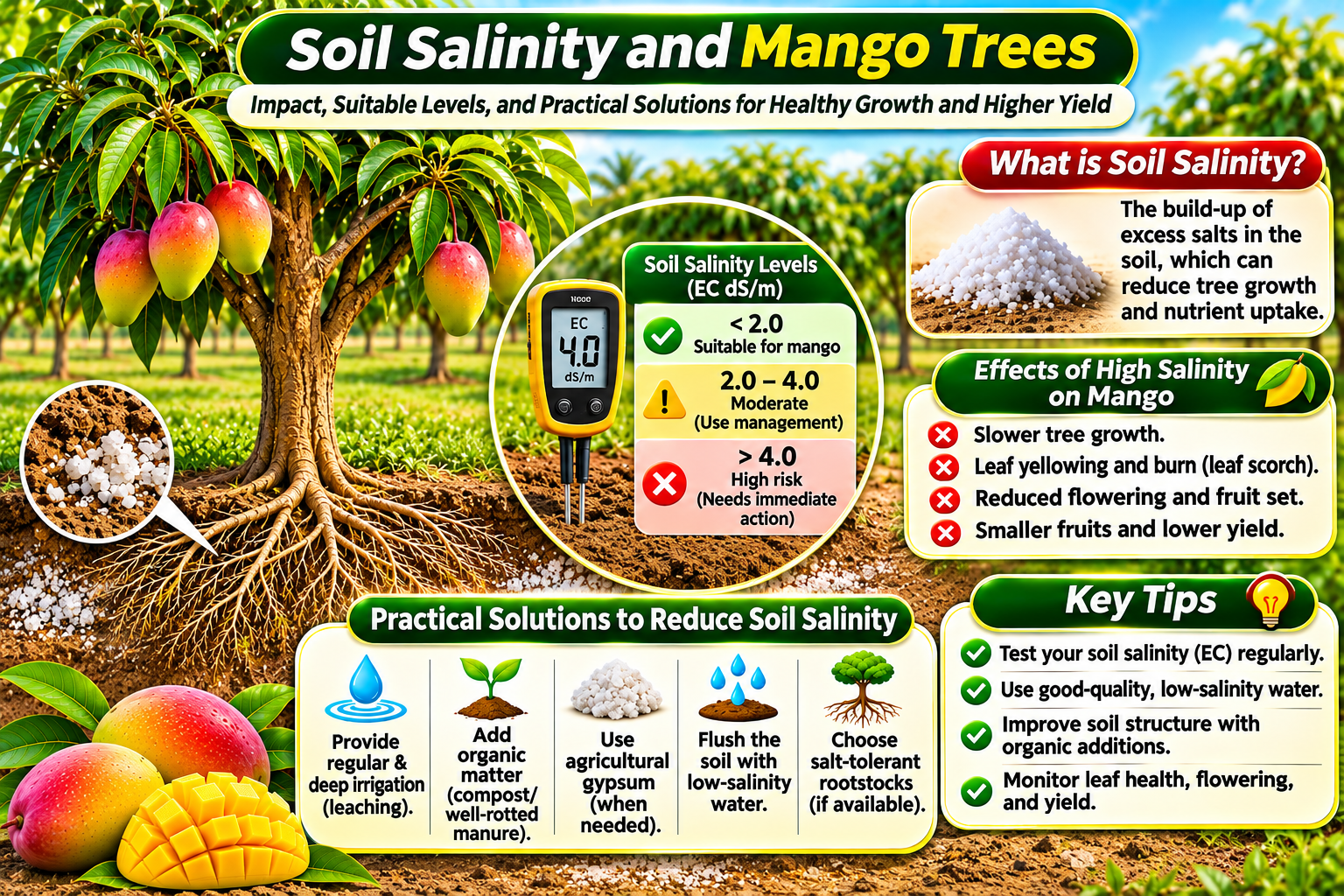
If you are planning to grow mango trees in pots in the UAE, pay attention to how quickly the growing medium dries out during summer, while also considering irrigation water quality and salinity.
5. Sunlight, Fertilization, and Pruning When Growing Mango Trees in Pots
Growing mango trees in pots requires sufficient sunlight to support leaf and branch development and flowering. Choose a sunny location that allows adequate light to reach the tree, while monitoring the temperature of the pot and leaves during periods of extreme summer heat.
Regarding fertilization, choose a fertilizer suitable for mango trees and consider the seedling's age and the condition of the growing medium. Container-grown trees need regular nutritional monitoring, but excessive fertilizer should be avoided, especially products rich in nitrogen.
Light pruning when necessary can also help control tree size, maintain a balanced shape, and remove dry or overlapping branches. Choose an appropriate pruning time to avoid removing branches that carry flower buds.
Monitoring sunlight, watering, fertilization, and pruning helps improve growing conditions and supports healthy development when cultivating mango trees in pots.
Conclusion
Growing mango trees in pots requires choosing a suitable variety, a container that accommodates root growth, and well-drained soil, along with providing appropriate sunlight, watering, and nutrition.
The success of growing mango trees in pots depends on monitoring the tree's condition and adjusting its care according to its age and climatic conditions. However, it is important to keep in mind that a mango tree's growth in a pot may be limited compared to growing it directly in the ground, and fruit production may be affected by the container size, variety, and growing conditions.












One thought on “زراعة المانجو في أصيص”
Comments are closed.