Local Samar Tree: 7 Essential Facts About Planting and Care
The Local Samar Tree is well known in desert and semi-desert environments. It is characterized by its ability to adapt to dry conditions when its growing requirements are met. It may be worth considering when planning gardens and outdoor landscapes in suitable areas.
If you are thinking about planting a Local Samar Tree in your garden or farm, it is helpful to learn about its characteristics, how to choose the right sapling, and the key factors that support its growth after planting.
1. What Is the Local Samar Tree?
The name Local Samar is commonly used for trees belonging to the acacia group, and Acacia tortilis is associated with this type. In some Arabic references, the tree is also known as the twisted acacia.
Knowing the scientific name helps distinguish between species with similar local names. Therefore, it is advisable to check the plant label or product description before purchasing to confirm the identity of the tree.
2. What Are the Main Characteristics of the Local Samar Tree?
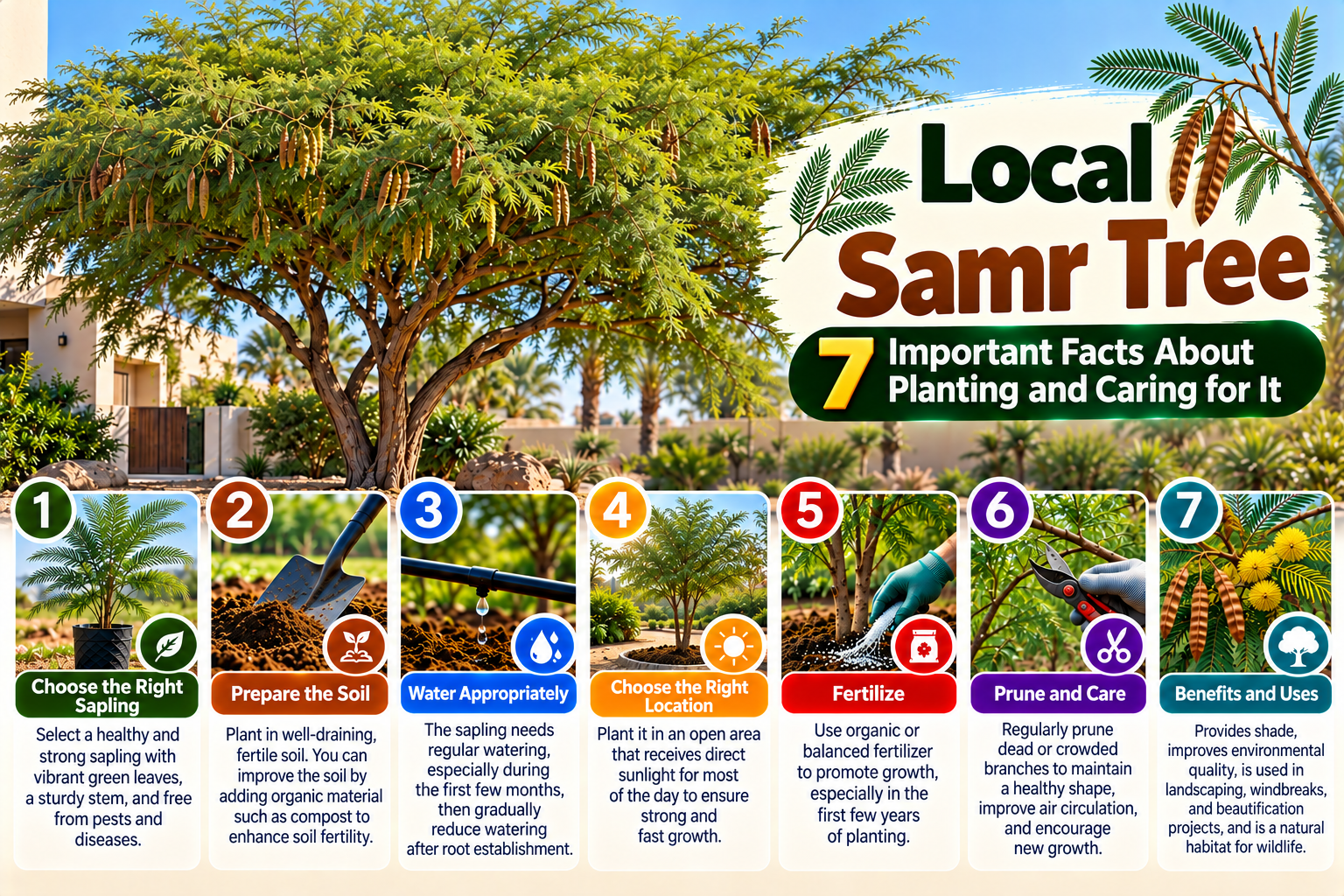
The Samar Tree typically has a broad crown and branching limbs, and it may bear thorns. It can also adapt to dry environments when suitable conditions are available. The tree’s size and final shape vary depending on the subspecies, climate, soil, and age of the plant.
Beyond its natural appearance, Samar Trees play an ecological role in some dry regions by supporting local vegetation and providing habitats for wildlife.
3. How Do You Choose a Local Samar Tree Sapling?
Before purchasing a sapling, it is important to check the plant’s condition and ensure that its information is clear. Consider the following points:
Scientific Name: Verify that the sapling belongs to the required species.
Plant Condition: Inspect the leaves, stem, and branches for visible signs of damage.
Root Condition: Ask about the health of the roots and their suitability for transport and planting.
Sapling Size: Check the height of the sapling and the size of its container before purchasing.
Sapling Source: Request information about the plant’s origin and propagation method.
Care Instructions: Obtain suitable watering and planting instructions for your location.
Checking these details helps you choose a suitable sapling and reduce the problems that may arise after transplanting it into the ground.
4. Is the Local Samar Tree Suitable for Growing in the UAE?
Local climate conditions are an important consideration when choosing trees for planting in the UAE. The suitability of the Local Samar Tree depends on the planting site, soil characteristics, drainage, and the sapling’s stage of growth.
Before planting, ask the nursery whether the tree is suitable for your area, especially if the sapling is young or will be planted in a location exposed to high temperatures. It is also advisable to allocate enough space for the tree to grow in the future.
5. What Is the Best Location for Planting a Local Samar Tree?
Choosing a suitable location helps organize the planting process and provides better conditions for the tree’s growth. Before planting, consider the following:
Choose a location that meets the tree’s sunlight requirements.
Ensure the soil provides adequate drainage.Ensure that the soil provides adequate drainage.
Allow sufficient space for the branches and roots to grow.
Maintain a suitable distance from buildings, pathways, and utilities.Maintain an appropriate distance between the tree and nearby buildings, pathways, and utilities.
Avoid locations where water remains around the roots for extended periods.Avoid locations where water accumulates around the roots for long periods.
It is best to prepare the planting site before bringing the sapling so that the planting process can proceed smoothly.
6. How Do You Care for a Local Samar Tree After Planting?
Tree care depends on the plant’s age, weather, soil type, and moisture level. Therefore, it is best to monitor the plant’s condition and adjust care according to its actual needs.
Watering: Monitor soil moisture and provide water during the sapling’s establishment period while avoiding overwatering.
Growth Monitoring: Inspect the stem, branches, and leaves regularly.
Soil and Drainage: Make sure water does not accumulate around the roots.
Pruning: Remove dead or damaged branches when necessary, taking the tree’s characteristics and thorns into account.
Fertilizing: Apply fertilizer when needed, following the recommendations of an agricultural specialist or nursery.
Weather Monitoring: Monitor the sapling during hot periods, especially immediately after planting.
The tree’s tolerance of dry conditions does not mean that young saplings can be left without care. Newly planted trees need attention appropriate to their stage of growth.
7. What Should You Know Before Buying a Local Samar Tree?
Before completing your purchase, review the product description and verify the scientific name, sapling size and condition, and any available information about its growing requirements. If you plan to plant it in a home garden, choose a location that allows the tree to grow without interfering with pathways or nearby structures.
You can visit the Local Samar Tree page on Masfout Gardens to review the available information and check availability.
Planning ahead helps you choose a tree that suits your available space and growing conditions.
Conclusion
Planting a Local Samar Tree begins with confirming the plant’s identity, selecting a healthy sapling, and preparing a suitable growing site. By monitoring soil moisture and providing care appropriate to the tree’s stage of growth, you can better organize the planting process.
Before purchasing, review the product details and ask about the sapling’s requirements to ensure it is suitable for your garden or farm.