Soil Testing Before Mango Planting: 7 Steps for Sampling and Analysis
Successful mango cultivation begins with choosing a suitable location and understanding the soil and irrigation water before preparing the farm. Soil testing before mango planting is an essential step in assessing the site and identifying its chemical and physical properties. It helps determine which tests are needed instead of relying on the soil’s appearance or assumptions. Testing goes beyond measuring salinity and pH; it also covers other indicators that provide a clearer picture of soil and irrigation water conditions before making planting decisions.
1. Why Is Soil Testing Before Mango Planting Important?
Soil testing before mango planting helps assess the site's characteristics before land preparation begins. Soil can vary in texture, pH, salinity levels, and nutrient content, even within the same farm.
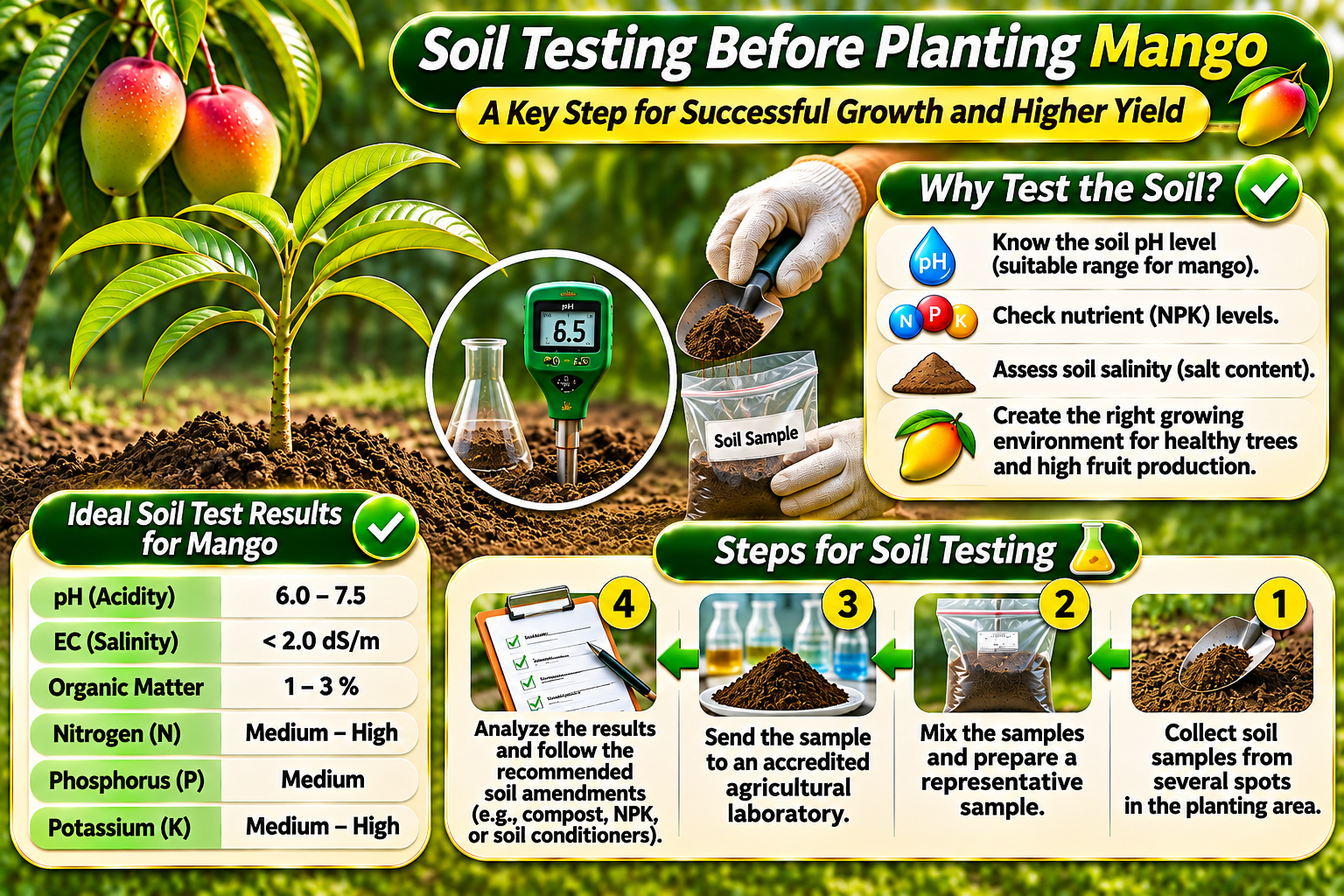
The importance of soil testing before mango planting lies in providing reliable information for site assessment. Test results can help identify:
Soil pH.
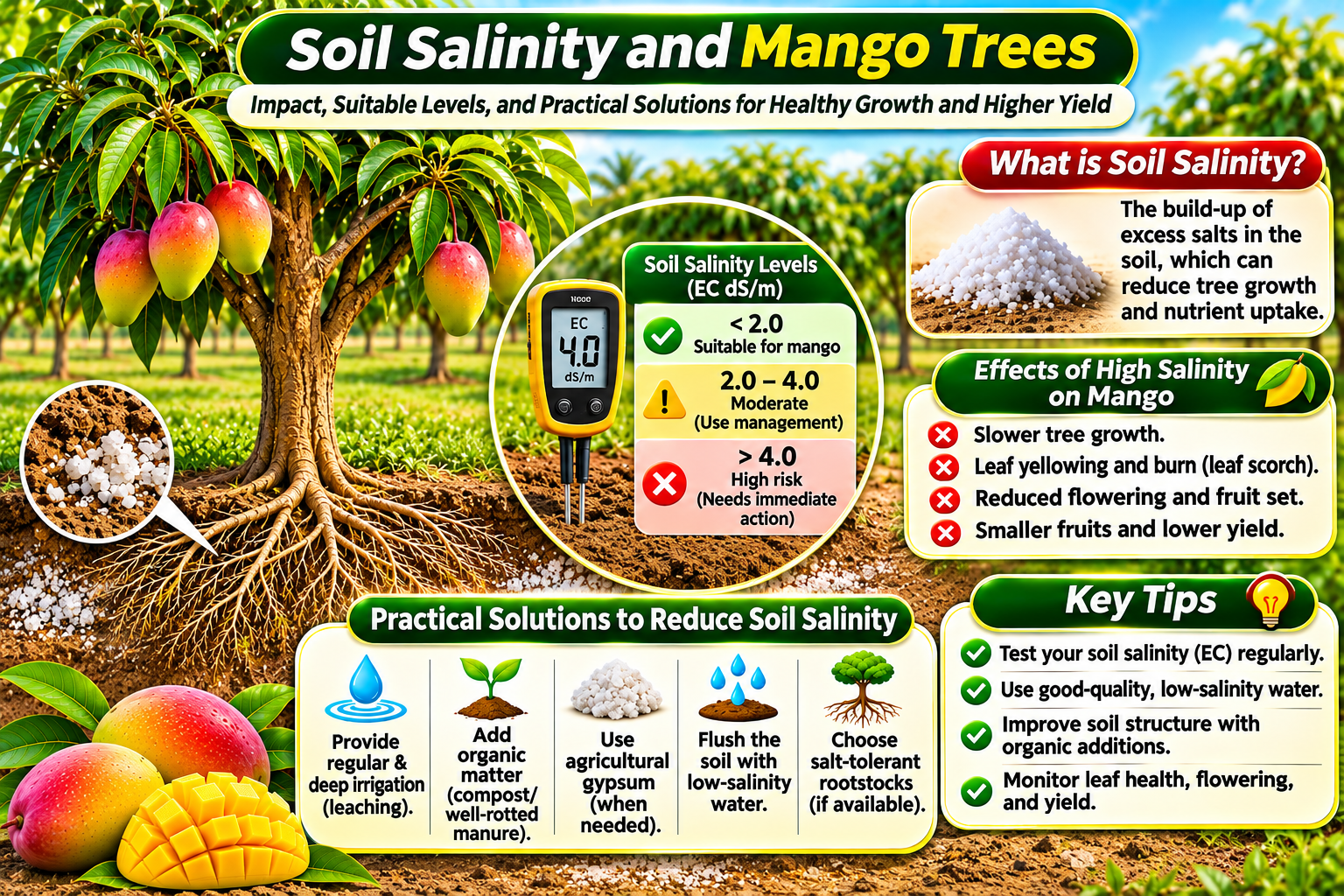
Electrical conductivity (EC) as an indicator of soluble salts.
Selected nutrients available to plants.
Soil texture and the proportions of sand, silt, and clay, when a physical soil analysis is requested.
Additional tests that may be required depending on the site's characteristics.
Farmers should not rely on visual inspection alone. Areas that appear similar may produce different soil testing results, making representative sampling essential.
2. Which Tests Should You Request from a Soil Laboratory?
When contacting a laboratory, explain that the purpose is to assess the land before establishing a mango farm. Ask the laboratory to recommend suitable tests based on the site's characteristics. The following tests can be considered as part of soil testing before mango planting.
Soil pH Measurement
This test indicates whether the soil is acidic, neutral, or alkaline. The result helps explain the chemical conditions that influence nutrient availability to plants.
Electrical Conductivity (EC)
Electrical conductivity is used as an indicator of soluble salt concentration in a soil sample. Results should be interpreted alongside the measurement method and the type of soil extract used, as values may differ depending on the testing procedure.
Nutrient Analysis
You can request measurements of the nutrients covered by the laboratory's testing package, such as phosphorus, potassium, and selected micronutrients. The report should identify the nutrients tested and the extraction method used so that the results can be interpreted correctly.
Soil Texture Analysis
This test determines the proportions of sand, silt, and clay, helping describe the soil's general texture and physical characteristics. These findings should be considered alongside the chemical test results rather than interpreted separately.
3. When Should You Test Irrigation Water?
Soil testing alone is not enough to assess a mango planting site. Irrigation water is a continuous source of water and dissolved salts reaching the root zone. For this reason, irrigation water testing for mango cultivation is recommended before relying on a particular water source.
When preparing for soil testing before mango planting, it is also useful to request a water analysis so that you have information about both the land and its irrigation source.
Tests to discuss with the laboratory include:
pH: Indicates the acidity or alkalinity of the water.
Electrical Conductivity (EC): Provides an indication of the total dissolved salts.
Sodium: Helps assess the contribution of sodium to irrigation water quality.
Chloride: Measures the concentration of an ion relevant to water quality assessment.
Bicarbonate: Provides additional information for chemical evaluation of irrigation water.
Sodium Adsorption Ratio (SAR): A calculated indicator based on selected ion concentrations that helps assess potential sodium-related risks.
No single result should be interpreted in isolation. Irrigation water quality assessment depends on the combined indicators, as well as soil characteristics and site conditions.
4. How Should You Collect a Soil Sample for Testing?
Sampling methods affect the accuracy of soil testing before mango planting. Therefore, follow the laboratory's instructions before collecting samples. A sample that does not represent the area may produce results that fail to reflect the actual soil conditions.
The following general steps can help:
Identify sampling areas: Divide the site into areas with similar soil characteristics, appearance, and land-use history.
Avoid unrepresentative spots: Stay away from waterlogged areas or locations where materials have been applied locally, unless these areas are being tested separately.
Use clean tools: Choose suitable, clean sampling equipment to prevent contamination.
Follow the laboratory's recommended depth: Do not assume that one sampling depth applies to every situation. The appropriate depth depends on the purpose of the test and the laboratory's instructions.
Prepare the sample: Collect representative portions according to the laboratory's sampling procedure and place them in a suitable container.
Label the sample: Record the area, sampling location, collection date, depth, and any relevant site observations.
Deliver it to the laboratory: Follow the laboratory's instructions regarding sample quantity, storage, and transportation.
These steps help improve the quality of soil testing before mango planting and make it easier to compare results across different areas. Avoid combining samples from clearly different soil zones, as this may conceal important variations within the site.
5. How Should You Prepare an Irrigation Water Sample?
Collect irrigation water from the source that will actually be used on the farm. Follow the laboratory's instructions regarding the sampling point, collection time, and container type.
General sampling steps include:
Use a clean container suitable for the requested analysis.
Follow the laboratory's instructions on whether water should run before sampling, particularly when collecting from a well or irrigation network.
Avoid touching the inside of the container or its lid.
Seal the container securely and label it with the water source and collection date.
Deliver the sample within the timeframe and under the conditions specified by the laboratory.
You can also consult the Irrigation Water Quality Sampling Guide from Utah State University Extension, while following the specific instructions provided by the laboratory conducting the analysis.
6. How Do You Read a Soil Analysis Report?
When you receive the results of soil testing before mango planting, avoid focusing on a single number without considering the other indicators. Understanding the report requires checking the test type, measurement units, and laboratory method before comparing the findings with relevant agricultural references and recommendations.
Important report details include:
pH: Helps identify the soil's acidity or alkalinity.
EC: Indicates soluble salt levels, taking the measurement method into account.
Nutrients: Shows which nutrients were measured and their levels according to the laboratory's method.
Soil texture: Describes the proportions of sand, silt, and clay when a physical analysis has been conducted.
Laboratory notes: May include test limitations or guidance on interpreting the results.
Reading soil testing results before mango planting helps build a more complete understanding of the site instead of relying on an isolated measurement. However, a laboratory report is not a ready-made prescription for agricultural practices. It is advisable to review the findings with an agricultural specialist before making land preparation decisions.
7. What Should You Do After Receiving the Test Results?
After receiving the soil and irrigation water analysis results, keep clear copies of both reports and record the area represented by each sample. If the results reveal differences between parts of the site, avoid treating the entire farm as one uniform area.
You can contact the laboratory to confirm the measurement units, testing methods, and reference ranges used. If any indicators are unclear, ask the laboratory for an explanation or consult an agricultural specialist familiar with the local conditions, soil type, and water source.
This makes soil testing before mango planting part of the overall site assessment rather than a routine procedure performed without reviewing the results. Keeping the reports also allows you to refer back to the findings when comparing the site's condition at later stages.
Conclusion
Soil testing before mango planting is an important step in understanding site characteristics before preparing a mango farm. Combining soil analysis with irrigation water testing provides clearer information about the land and its water source, provided that samples are collected correctly and the results are interpreted within their agricultural context.
By reviewing soil testing results before mango planting with the laboratory or an agricultural specialist, you can assess the site using actual data rather than assumptions. After evaluating your planting site, explore the mango varieties available from Masfout Gardens and enquire about seedling specifications before placing an order.